⏱ Estimated reading time: 12 minutes
If your teen can’t fall asleep before midnight and can’t get up before noon, it’s tempting to interpret that as a habit problem – too much screen time, not enough self discipline, staying up ‘because they want to’. In reality there’s a lot going on with teen sleep that’s beyond their control.
Adolescence comes with a genuine change in sleep biology. The body’s internal clock (the circadian rhythm) shifts later, and the pressure to sleep builds more slowly than it does in childhood or adulthood.
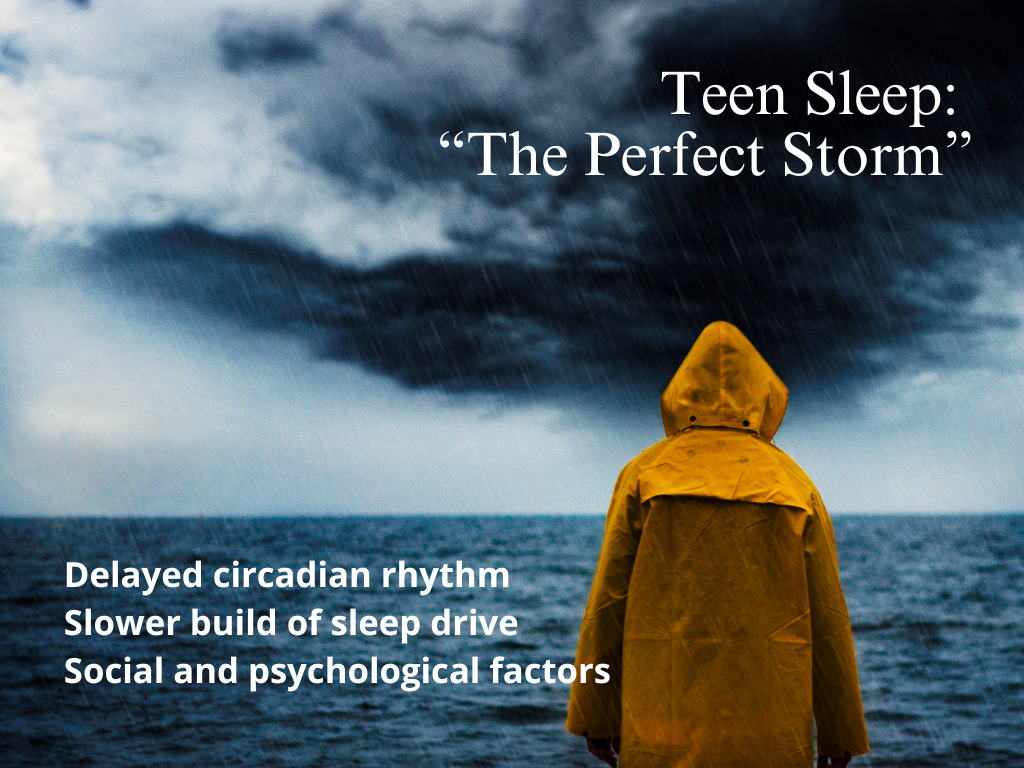
Layer on a heavier academic load, more independence, and a fixed early school start time, and you get what’s referred to by sleep researchers as “the perfect storm”.
Why sleep matters so much for teens
What’s actually changing with teen sleep
Two systems govern sleep:
- Circadian rhythm determines when your body expects to sleep
- Sleep drive determines how ready your body is to sleep based on how long you’ve been awake.
In adolescence both of these systems shift, so that teen sleep looks different to sleep for any other age group.
Teen sleep and circadian rhythm
During adolescence, sleep timing can shift to around two hours later 1. This effectively turns teens into night owls. This shift towards later sleep timings isn’t a preference—it’s a normal part of development. This circadian phase delay continues into our early twenties, when it gradually starts to shift back to an earlier timing 4.
This is why a 7am alarm can feel brutal for a teenager in a way that it doesn’t for an adult. It’s not that they’re less disciplined about mornings (well maybe it’s a bit of that). Their body is being woken up at a time that, biologically, still feels like the middle of the night.
Teen sleep and sleep drive
Another huge biological change during puberty is in sleep drive – the pressure to sleep that builds gradually throughout the day.
Think of sleep drive as a bath filling up. In younger children the tap runs full blast, so they get sleepy faster – think about how frequently babies sleep. During adolescence the tap is down to a trickle 5. The bath simply isn’t full at 9pm. The result is that teenagers often don’t feel genuinely sleepy until much later in the evening, even though they still need around the same amount of sleep overall. Pair this with early school start times and you get a recipe for sleep deprivation.
How much sleep do teens need?
How much sleep we need is another thing that changes with age, and like circadian rhythm and sleep drive it varies person-to-person. Most teens need between eight and ten hours of sleep per night, although individual sleep needs vary.
Biology is only part of the picture
Biology sets the scene, but other key aspects of adolescence make things even trickier. Academic and social demands increase sharply in the teenage years, and that time has to come from somewhere – sleep is usually the first thing sacrificed. Homework and study are consistently among the top reasons teens give for staying up late 6. Increased independence plays a role too. As teens gain independence, they’re far more likely to set their own bedtime, and most families stop setting one at all – only around 7% of teens report having a parent-set bedtime 7.
That matters more than you might think. Teens with a parent-set bedtime tend to go to bed earlier and get more sleep than those who don’t. If you’ve already granted your teen bedtime independence it’s not too late to backtrack – families who do reintroduce some kind of bedtime structure tend to see real gains in sleep, and teens often report feeling supported.
The complication of screens
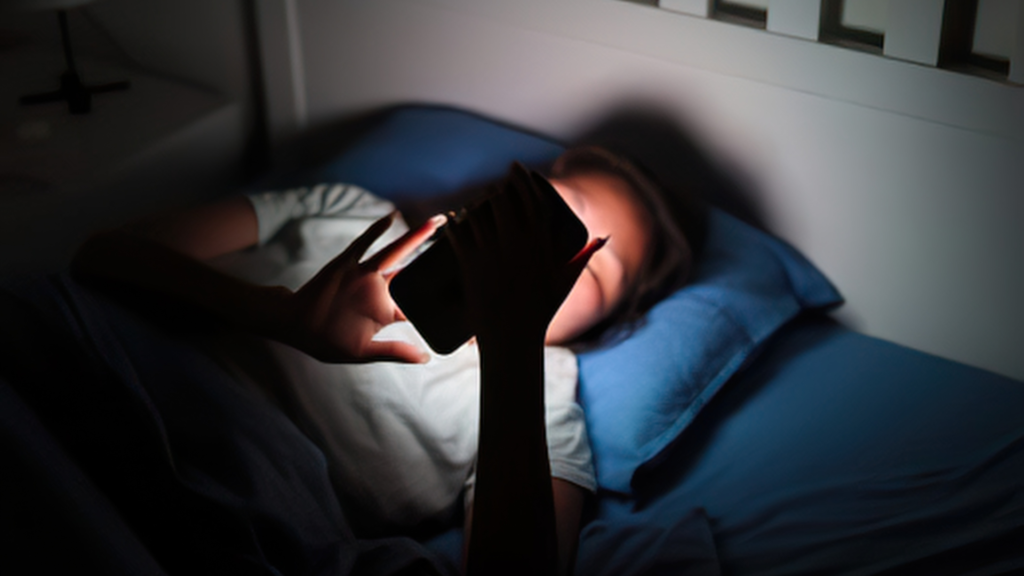
Screens are often blamed for teen sleep problems, and there’s something in it: more screen use is linked with later bedtimes and shorter sleep in teens 3. But it isn’t a one-way street. Screens aren’t necessarily what’s keeping teens up. They can also be what teens turn to when they can’t fall asleep, because they give them something to do while they wait. That matters. If a teen’s body clock and sleep drive mean they can’t fall asleep yet, taking screens away without offering an alternative might make things worse, not better.
“I’ll catch up on sleep at the weekend”
Sleeping in after a week of early mornings feels like an obvious solution. Unfortunately, it tends to backfire.
We tend to want to sleep in on weekends when we’ve spent the week being sleep deprived. For teens this is often caused by social jetlag – when the times that we’re able to sleep don’t match the times our biology wants us to sleep. In teen sleep social jetlag is really common and is linked to poorer mood and academic performance 2. There are a few reasons for this.
- Weekend catch-up sleep doesn’t fully repay accumulated sleep debt from the week. Research suggests that even after two nights of catch-up sleep teens still struggle more with attention and learning tasks than those who regularly get enough sleep during the week.
- Delaying sleep timing over the weekend makes it even harder to sleep on schedule when Sunday night and Monday morning come around. This means your teen is already out of sync at the start of their week, so the cycle continues.
- If they’re catching up on sleep at the weekend because they’re sleep deprived during the week, they’ll probably also be struggling in school because of tiredness. Over time this impacts learning, motivation, and grades.
Consistent sleep timings are the key to avoiding the catch-up trap.
The myth
The reality
Teens are just lazy.
I can’t claim that some of them aren’t, but most of them are chronically sleep deprived, and that requires a different response to laziness.
They’ll grow out of it.
This one’s partly true – sleep patterns shift again in our early 20s. But that’s a long wait for a sleep-deprived teen (and their parents), and there are things we can do to help in the meantime.
What actually helps with teen sleep?
There may be a biological basis for many teen sleep challenges, but that doesn’t mean that teen sleep is unfixable. And that’s a mistake people commonly make. When we assume that all teens are tired all of the time we’re less inclined to help, and they’re less inclined to help themselves. Understanding what’s driving poor teen sleep helps us understand what can be done.
Start by understanding what ‘normal’ sleep looks like
Teen sleep is unique. What’s ‘normal’ for your teen is not the same as what’s normal for you, or the same as what was normal for them pre-adolescence. And sleep isn’t the same for all teens. So it’s important to understand individual needs and be realistic in your expectations.
Aim for consistency
Teens are often told they need more sleep, which is a hard thing to achieve. The good news is that consistency is at least as important (5). Regular sleep and wake times help stabilise the circadian system and regulate sleep drive.
Don’t give up on bedtimes
The evidence suggests most teens are more open to parent-set bedtimes than parents assume. If your teen is resistant it might feel hopeless, but even teens who report that they ignore their set bedtime tend to get more sleep than teens with no set bedtime at all 7.
If you’ve already abandoned set bedtimes, it’s not too late to reintroduce them. Talk openly with your teen about why you’re doing it and make it clear that the aim is to support them, rather than simply control their bedtime.
Use light to ‘nudge’ the body clock
Daylight is one of the strongest signals we can give our body clocks to nudge sleep timings 4. Getting as much morning daylight as possible, and using dim lights in the evening will help to keep your teen’s body clock in sync with their schedule. An added bonus is that getting morning daylight reduces the impact of blue light at night, so you can worry less about evening screen time.
Be cautious with melatonin
It’s not the solution that many people think it is – it can help shift the timing of sleep but that’s potentially just one of a whole host of challenges. Melatonin won’t address underlying patterns that are maintaining sleep problems.
If you’re going to try melatonin, discuss it with a prescriber rather than buying online, as the content of non-prescription melatonin can vary 8.
When worry and workload are the problem
If racing thoughts or pre-sleep anxiety are keeping your teen awake, no amount of rules and routines will necessarily fix the problem. Cognitive Behavioural Therapy for Insomnia (CBT-I) can be effective for adolescents experiencing insomnia 9.
If your teen is struggling with academic demands, an earlier bedtime will only create more stress. Instead, talk to teachers about reducing demands or getting more support in meeting those demands.
Be a good role model
You have my permission to prioritise your own sleep too! Parents of teens who are sleeping badly, are often sleeping badly themselves. And this leaves them with less capacity to parent. Also, teens will learn from what they see you do. Modelling healthy sleep habits is linked with better sleep in teens 10.
Push for healthier systems
Individual families can make meaningful changes, but broader systems matter too.
Later school start times have been shown to measurably increase teen sleep and improve mood and attentiveness 11. This only helps if teens actually have room in their schedule for more sleep; if workload already consumes every spare hour, shifting the school day won’t create sleep on its own.
When to get more support
Some sleep difficulties in the teenage years need more support than these strategies can provide. If sleep problems are chronic, severe, distressing, or persist despite consistent efforts to address them, it’s worth talking to a health professional. This is particularly important if sleep is significantly affecting your teen’s mood, daytime functioning, school attendance or performance, or relationships.
Where to begin
A teen who can’t sleep before midnight isn’t choosing to be difficult. Equally a teen who struggles to get out of bed in the mornings isn’t lazy. Their internal clock has genuinely moved, their workload has increased, and their biological readiness for sleep is arriving hours later than it used to. Fighting that timing head-on rarely works, so cut yourself some slack and choose a few easy things to change.
Build these changes into your routine so they stick. Consistent sleep timings, appropriately timed light exposure, realistic bedtime expectations and evidence-based psychological interventions all have an important role. Sleep doesn’t need to be a battleground. If you can find some common goals with your teens the conversations will be easier.
I regularly run workshops on teen sleep, so if you’re keen to know more, take a look at my upcoming workshops here.
If you’d prefer more personalised support, get in touch and we can talk through ways I can help.
References
- Crowley, S. J., Wolfson, A. R., Tarokh, L., & Carskadon, M. A. (2018). An update on adolescent sleep: New evidence informing the perfect storm model. Journal of adolescence, 67, 55-65.
- Ten Brink, M., Lee, H. Y., Manber, R., Yeager, D. S., & Gross, J. J. (2021). Stress, sleep, and coping self-efficacy in adolescents. Journal of Youth and Adolescence, 50, 485-505.
- Gradisar, M., Kahn, M., Micic, G., Short, M., Reynolds, C., Orchard, F., … & Richardson, C. (2022). Sleep’s role in the development and resolution of adolescent depression. Nature Reviews Psychology, 1(9), 512-523.
- Roenneberg, T., & Merrow, M. (2007, January). Entrainment of the human circadian clock. In Cold Spring Harbor symposia on quantitative biology (Vol. 72, pp. 293-299). Cold Spring Harbor Laboratory Press.
- Jenni, O. G., Achermann, P., & Carskadon, M. A. (2005). Homeostatic sleep regulation in adolescents. Sleep, 28(11), 1446-1454.
- Yeo, S. C., Tan, J., Lo, J. C., Chee, M. W., & Gooley, J. J. (2020). Associations of time spent on homework or studying with nocturnal sleep behavior and depression symptoms in adolescents from Singapore. Sleep Health, 6(6), 758-766.
- Bauducco, S. V., Gardner, L. A., Champion, K., Newton, N., & Gradisar, M. (2024). It’s past your bedtime, but does it matter anymore? How longitudinal changes in bedtime rules relate to adolescents’ sleep. Journal of Sleep Research, 33(2), e13940.
- Cohen PA, Avula B, Wang Y, Katragunta K, Khan I. Quantity of Melatonin and CBD in Melatonin Gummies Sold in the US. JAMA. 2023;329(16):1401–1402. doi:10.1001/jama.2023.2296
- Galgut, Y., Hoyos, C., Kempler, L., Aji, M., Grunstein, R. R., Gordon, C. J., & Bartlett, D. J. (2025). Cognitive and behavioural therapy for insomnia in the treatment of adolescent insomnia: A systematic review and meta‐analysis of randomised controlled trials. Journal of Sleep Research, 34(4), e14442.
- Khor, S. P., McClure, A., Aldridge, G., Bei, B., & Yap, M. B. (2021). Modifiable parental factors in adolescent sleep: A systematic review and meta-analysis. Sleep medicine reviews, 56, 101408.
- Lo, J. C., Lee, S. M., Lee, X. K., Sasmita, K., Chee, N. I., Tandi, J., … & Chee, M. W. (2018). Sustained benefits of delaying school start time on adolescent sleep and well-being. Sleep, 41(6), zsy052.