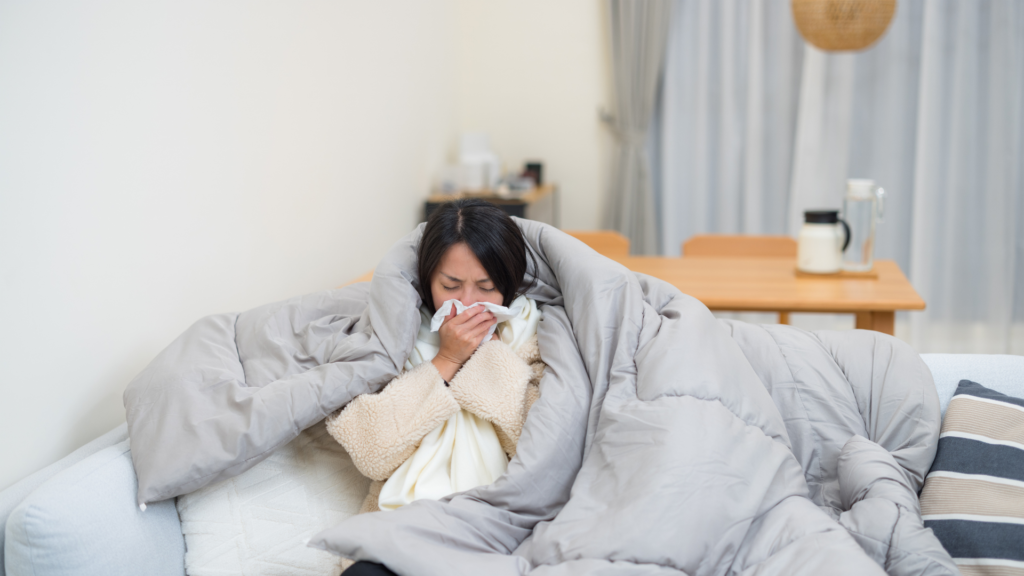
⏱ Estimated reading time: 12 minutes
What’s the best thing you can do to avoid getting sick? Well ok, hand washing is definitely up there, but sleep may be your body’s most overlooked defence against viruses and infections.
Viruses are always circulating, and some of us just seem to pick them up more easily, or struggle more to shift them. There are a lot of factors determining your likelihood of picking up the latest bug that’s going around, but sleep is one of the important ones. Not how much vitamin C you’ve been taking, not how much hand sanitiser you’ve been using – sleep.
Sleep really is your superpower when it comes to staying healthy and recovering faster when you do pick up the latest lurgy.
Read on to find out:
- How your sleep health and immune health are closely interlinked
- How much sleep you need to protect yourself from sickness
- How sleep can make vaccinations more effective
- What you can do to get good sleep when you’re sick
What's actually happening when you get sick
Once a virus gets into your system, your body launches an intensive response. This isn’t a passive process. Your immune system works around the clock, activating and deploying immune cells and producing antibodies to help fight the infection 1.
This is why illness leaves you so exhausted. You’re not being lazy — fatigue and reduced activity are part of your body’s coordinated response to infection, encouraging you to rest and conserve energy while your immune system gets on with fighting the virus. Trying to push through and maintain your normal pace works against those signals at exactly the point your body is telling you to slow down.
Your sleep changes shape while you're sick
Our sleep isn’t the same from beginning to end. We typically get more deep sleep earlier in the night, while REM sleep becomes more prominent as the night goes on. When we’re sick, that usual pattern can change 2.
We get more deep sleep
Deep sleep is particularly closely linked with some of the processes involved in immune regulation. During an infection, we tend to get more deep sleep, which appears to be part of the body’s coordinated immune response.
We get less REM sleep (Rapid Eye Movement)
When we’re fighting an infection, our body raises its temperature set-point, which is why we can have a fever but still feel cold and shiver. During REM sleep, our ability to regulate our temperature — including shivering — is reduced. Spending less time in REM when we’re sick may therefore help our body maintain the fever that helps us fight the infection.
The takeaway here is that, if you’re getting enough sleep, your brain will cleverly prioritise which sleep stages it needs and rearrange them accordingly.
Why you don't catch everything you're exposed to
The viruses that cause the common cold are always circulating, and we’re regularly exposed to them through other people and the environments we share. But exposure doesn’t necessarily mean getting sick. Something determines who develops an infection and who doesn’t — and sleep turns out to be one of the important factors.
In 2015 researcher Aric Prather and colleagues 3 tested this directly. They recruited 164 healthy adults, and used sleep diaries and wearable trackers to measure each person’s sleep over a week. Then they sprayed a live cold virus into each person’s nose, quarantined everyone, and watched who actually developed symptoms. Gotta love psychological research.
The people sleeping the least were far more likely to come down with a cold. Adults averaging less than six hours a night were about four times more likely to catch the cold than those sleeping more than seven hours. That’s an old study now, but more recent research has continued to find links between shorter or poorer sleep and greater susceptibility to respiratory infections 4, 5.
So how much sleep do you actually need?
For most adults, somewhere around seven to nine hours is a useful guide, but your individual sleep need may sit outside that range. When it comes to avoiding sickness, the research suggests that regularly getting less than six hours is usually associated with a noticeably higher risk 3, 4.
There’s no one-size-fits-all, so knowing your own sleep needs is important.
What about sleeping too much?
Interestingly, some studies have also found higher rates of respiratory infections among people who sleep for longer periods, but the evidence here is much less clear 4. This connection doesn’t necessarily mean that sleeping too much makes you more vulnerable to infection. There are lots of other reasons why someone might regularly sleep for longer, including underlying health conditions. This makes it difficult to untangle the connection and know whether long sleep itself has anything to do with getting sick.
Sleep quality counts too
It’s not just about how long you sleep either. Sleep disturbances — trouble falling asleep, trouble staying asleep, or sleep that doesn’t feel restorative — are also linked to increased risk of illness 6.
If you’re consistently getting eight hours, but that eight hours is poor quality sleep, it might not be protecting you in the way it could.
How sleep helps keep you healthy
Sleep is always working to support your immune system, and it continues to support you when you’re sick.
Boosting your immune system
Sleep and the immune system communicate with each other through chemical messengers called cytokines. Some cytokines help regulate sleep, while sleep itself influences the production and activity of different cytokines and immune cells. During an infection, this two-way communication helps coordinate the immune response and is one reason why feeling sleepy and wanting to sleep more is such a common part of being sick 2.
Inflammation
When you don’t get enough sleep, your body reacts as though it’s under stress – it ramps up the release of inflammatory signals as part of a general stress response 7. With chronic poor sleep, those signals stay elevated instead of switching on and off as needed. Over time, this can contribute to dysregulated immune function, where inflammatory activity is no longer as tightly controlled as it should be 7.
Immune memory
Sleep also supports something called immune memory. Just as sleep helps your brain consolidate learning and form new memories, it seems to strengthen your immune system’s memory too — helping it recognise and react more effectively to viruses it’s encountered before 2.
Does sleep affect how well your vaccine works?
If you’re considering a flu shot to help you through the winter months, sleep can also help there. Several studies have found that sleep loss reduces the strength of the immune response to vaccination.
Some interesting findings:
- In one study, each additional hour of sleep around the time of vaccination was associated with roughly 50% higher subsequent antibody levels 8.
- When researchers pooled the available evidence in a 2023 meta-analysis, sleeping for less than six hours a night was associated with a weaker antibody response to vaccination 9.
Some researchers have also looked at whether the time of day you get vaccinated makes a difference. The theory is that immune activity is related to our circadian rhythms, so getting vaccinated at different times of day might make the vaccination more or less effective. So far, the evidence is mixed – it’s hard to pinpoint the effect of circadian timing when there are so many other factors involved like work stress, general health, vaccination history… 10. It’s an interesting new research direction though and maybe in the future we’ll be scheduling our vaccinations according to our individual circadian patterns.
Getting good sleep while you're sick
The catch-22 when it comes to sleeping when sick is that, although this is when we most need sleep, this is also when it can be hardest to get. Congestion, coughing, aches and pains can make it difficult to fall asleep and stay asleep. Even when you do drift off, you might wake in the night sweating one minute and shivering the next. So how can you get the sleep that’s so crucial to your recovery?
Manage your symptoms before bed. Treating congestion, fever, or a sore throat before you try to sleep makes falling and staying asleep far easier than fighting through it.
Get as comfy as you can. Propping your head up on a higher pillow can help with congestion, but the exact sleeping position you choose matters far less than simply feeling supported and comfortable. Have your favourite blankets nearby and wear your cosiest pyjamas.
Check that medications aren’t interfering with sleep. If you’re using cold or flu medication, check the ingredients. Some products contain caffeine or other ingredients that can interfere with sleep, which isn’t particularly helpful when sleep is what you’re trying to get.
Have a hot shower or bath before bed. This can help you relax and temporarily clear congestion, making it easier to breathe once you lie down. It’s not going to fix your cold but it might help you fall asleep.
Deal with disruptions quickly. If you wake in the night, blow your nose, sip some water, or do whatever’s needed, rather than lying there feeling uncomfortable and trying to sleep.
Prepare your sleep environment. The same basics that support good sleep when you’re well matter even more when you’re not. Keep your room cool, dark and quiet. But also make sure you have everything nearby that you might need in the night – box of tissues, plenty of water, extra pillow and blankets to deal with fluctuating temperatures.
Don’t worry too much about your normal sleep routine. At least not while you’re acutely unwell. If you’re exhausted earlier than usual, go to bed. If you’ve had a terrible night and need to sleep later, sleep later. As you start to recover, gradually returning to your usual sleep and wake times can help get your normal rhythm back on track.
Get your circadian rhythm back on track as you recover. Once acute symptoms start to ease, getting some daylight exposure and gentle movement helps get your circadian rhythm back in sync and supports a smoother recovery than simply staying in bed longer than you need to.
Nap if you need to. Naps have been shown to reduce some of the immune costs of a bad night of sleep 2, and there’s no reason to restrict daytime sleep simply because you’re sick. But as you start to recover, pay attention to whether long or late naps are making it harder to sleep at night. If they are, shortening your naps and keeping them earlier in the day can help rebuild your nighttime sleep drive.
Don’t be a martyr. Stay home and rest! We all got better at this during Covid-19, but bad habits may be creeping back in. By staying home you’ll be giving your body the rest it’s asking for. You’ll also be doing your colleagues a favour by reducing their risk of getting sick.
Protect Your Sleep Before You Need To
Prevention is better than cure, and sleep is one of the few things you have real control over here. Prioritise it consistently — not just when you feel a cold coming on — and you’re giving your body a genuine edge: better odds of not getting sick, and a stronger immune system.
So the next time you feel run down and you’re tempted to push through and ignore it, don’t. Good sleep isn’t the reward for getting through a busy week, or something you catch up on once you’re already unwell. It’s the groundwork — the thing that was quietly working in your favour before you ever knew you needed it.
References
- Krapic, M., Kavazovic, I., & Wensveen, F. M. (2021). Immunological mechanisms of sickness behavior in viral infection. Viruses. 2021; 13: 2245.
- Besedovsky, L., Lange, T., & Haack, M. (2019). The sleep-immune crosstalk in health and disease. Physiological reviews, 99(3), 1325-1380.
- Prather, A. A., Janicki-Deverts, D., Hall, M. H., & Cohen, S. (2015). Behaviorally assessed sleep and susceptibility to the common cold. Sleep, 38(9), 1353-1359.
- Robinson, C. H., Albury, C., McCartney, D., Fletcher, B., Roberts, N., Jury, I., & Lee, J. (2021). The relationship between duration and quality of sleep and upper respiratory tract infections: a systematic review. Family Practice, 38(6), 802-810.
- Garbarino, S., Lanteri, P., Bragazzi, N. L., Magnavita, N., & Scoditti, E. (2021). Role of sleep deprivation in immune-related disease risk and outcomes. Communications biology, 4(1), 1304.
- Jones, S. E., Maisha, F. I., Strausz, S. J., Lammi, V., Cade, B. E., Tervi, A., … & Tuomi, T. (2023). The public health impact of poor sleep on severe COVID-19, influenza and upper respiratory infections. EBioMedicine, 93.
- Irwin, M. R., Olmstead, R., & Carroll, J. E. (2016). Sleep disturbance, sleep duration, and inflammation: a systematic review and meta-analysis of cohort studies and experimental sleep deprivation. Biological psychiatry, 80(1), 40-52.
- Prather, A. A., Hall, M., Fury, J. M., Ross, D. C., Muldoon, M. F., Cohen, S., & Marsland, A. L. (2012). Sleep and antibody response to hepatitis B vaccination. Sleep, 35(8), 1063-1069.
- Spiegel, K., Rey, A. E., Cheylus, A., Ayling, K., Benedict, C., Lange, T., … & Van Cauter, E. (2023). A meta-analysis of the associations between insufficient sleep duration and antibody response to vaccination. Current Biology, 33(5), 998-1005.
- Wyse, C. A., Rudderham, L. M., Nordon, E. A., Ince, L. M., Coogan, A. N., & Lopez, L. M. (2024). Circadian variation in the response to vaccination: a systematic review and evidence appraisal. Journal of Biological Rhythms, 39(3), 219-236.